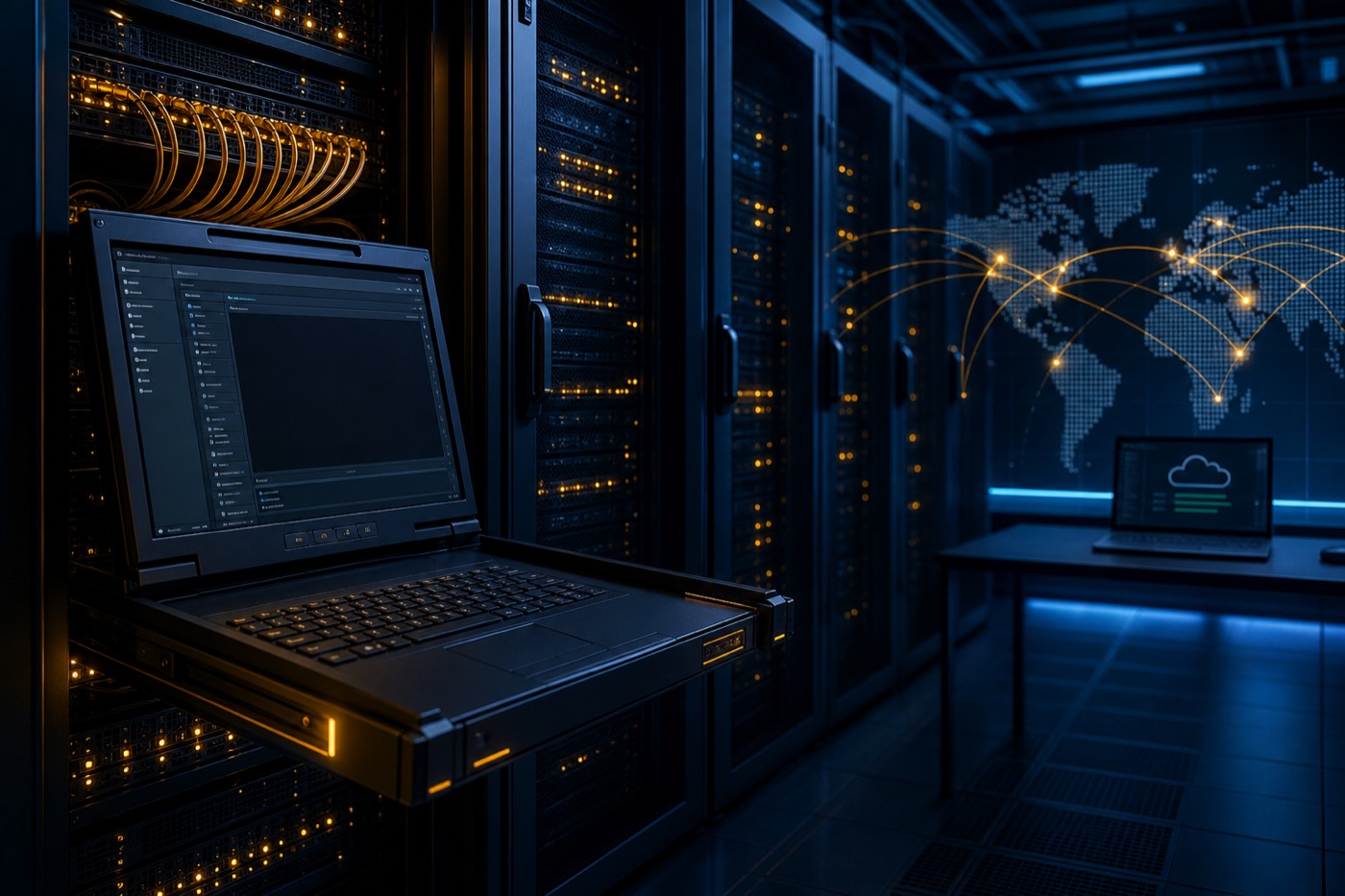
Why remote management is essential for dedicated
When the OS crashes, a kernel panics or RAID is rebuilding, SSH/RDP is not enough. Out-of-band management (IPMI, iLO, iDRAC, iKVM) reaches the hardware independently of the operating system. At KuzeyDC Tier III, dedicated customers use this layer together with physical security and NOC processes.
What IPMI / iKVM unlocks
IPMI supports power control, sensor monitoring and virtual console. Boot issues, BIOS changes or recovery media work can be handled without a site visit.
- Open a console when the OS is unreachable
- Perform reboots and power cycles safely
- Catch hardware alerts early (temperature, fans, PSU)
When remote hands takes over
Cable changes, disk swaps, KVM attach and physical inventory tasks are ideal for remote hands. You send numbered instructions; the NOC executes on site and reports the outcome.
- Provide written, numbered intervention steps
- Define the change window and rollback plan
- Verify health checks after the work (ping, services, disks)
Strong IPMI hygiene (VPN/allowlist, strong credentials, firmware updates) should run together with remote hands. That combination keeps dedicated servers both high performing and supportable on site.